

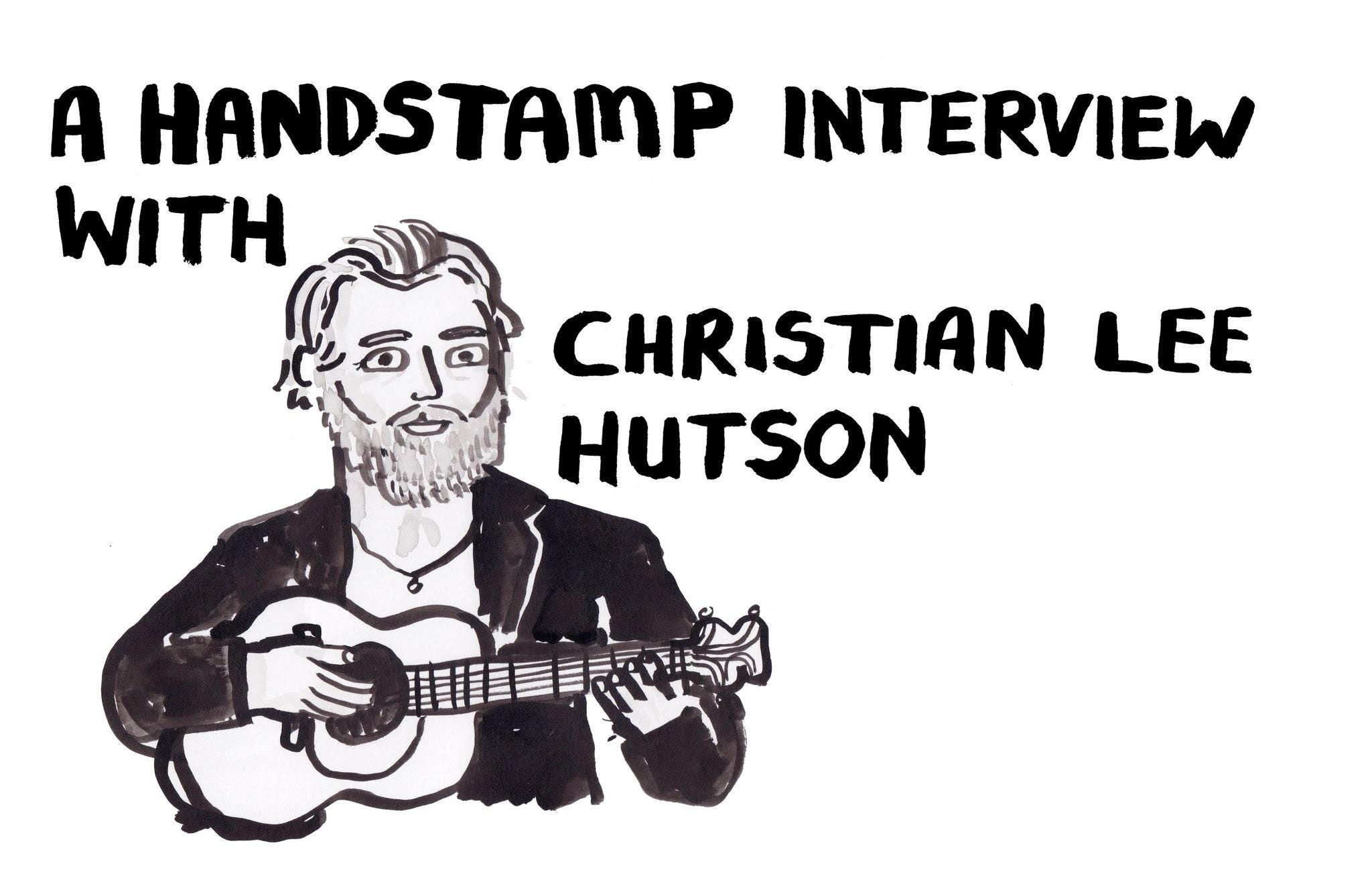
A Handstamp Interview with Christian Lee Hutson
Halloween concerts, makeshift venues, LA, New York and talking in crowds

I started playing shows with my friends again, incorporated a 90’s TalkBoy into the set and sold a few baseball hats. After a weird time, it felt so good to play new songs to people, which you can stream online now.
Have I still found ample time to talk to musicians about shows amidst all the activity? I don’t know, you tell me…
I spoke to Christian Lee Hutson in July, when he connected from his New York apartment. I’ve been a fervent appreciator of his music since the release of 2020 album Beginners, so was keen to talk about some of the experiences that directly informed his writing.
Sat by his generously-opened window, smoke in hand and clearly unafraid of pregnant pauses, Hutson outlined his short-lived origin story in Kansas City.
Christian Lee Hutson: “I was born there, but it is probably misleading to say I’m from there, as I don’t really remember it. I moved to LA when I was five.”
Handstamp: So you left before you had any exposure to live performance, I assume?
CLH: “I don’t think I saw any type of live performance until I was around 13.”
Handstamp: Can you recall that experience?
CLH: “I went to see Misfits and Alice Cooper, at some sort of Halloween thing at The Greek Theatre.”
Handstamp: Yeah, that sounds Halloween-ish, based on the line-up.
CLH: “Pretty Halloween-ish. I don’t remember a lot, except that I was confused as it was a weird line-up of Misfits. They’re one of those bands who toured forever with people who weren’t even in the band, a bunch of side characters.”
Handstamp: A Beach Boys situation?
CLH: “Yeah. Jerry Only was the singer, Marky Ramone played drums. It was a three-piece. Then Alice Cooper, I only knew him from Waynes World but knew none of the songs.”
Handstamp: A real baptism of fire, having that as your first live music experience.
CLH: “I mean, it was awesome, but I didn’t go home thinking ‘I want to do what they’re doing!’. I just thought ‘this is a weird Halloween.”
Handstamp: Amazing. Do you remember the first show that DID make you feel that way?
CLH: “I saw a guy playing in a church, maybe the next year, who was like a year older than me. His name was Hank May. He got up on stage and played songs that he wrote, in a punk church in Venice Beach. That’s when I realized that I could do it.”
Handstamp: LA is obviously pretty sprawling, with various pockets of contrasting cultures all over the city. Did you find a specific scene that you were able to find inspiration from?
CLH: “There were a lot of high school bands. Most of my close friends weren’t at the same school as me, so the time when I would socialize was going to concerts with them at all-ages clubs. There was a little scene of people – most of whom don’t play music anymore – playing hardcore, like Black Flag kind of stuff. Then a lot of indie rock bands, Rilo Kiley adjacent.”
Handstamp: Any venues that are worth mentioning from that time?
CLH: “We went to The Roxy. That was where a lot of Hollywood would go and pay to play. Anyone could get a show.’
“There was a guy who was a bit of a classic crook of the LA music scene. You would book the show, give him a bunch of money, he’d give you 200 tickets and just be like ‘good luck!”
Handstamp: You were forced into some sort of entrepreneurial pursuit at an early age?
CLH: “I remember the first time I did it. It wasn’t the way I thought it would go. They would call themselves promoters, but it seemed a lot more like I was the promoter.”
Handstamp: Yeah, you’d think as a promoter, he’d do the promoting.
CLH: “Yeah, I had a stack of tickets and had no idea what to do with them all. You had to beg your friends, with a load of tickets in your backpack. Eventually you’d have to give a bunch away and find another way of paying for it.’
“There were a load of other venues that weren’t really venues. There was a place in Santa Monica called The Kutting Room, which was a salon in the daytime, then a high school promoter turned it into a venue by night. That happened a lot, there was a bunch of churches with halfpipes in the back, where they’d host community concerts that would end with kids puking in the rectory.’
“The Troubadour. We’d play there and go to see a lot of shows there too, which was very cool. I saw someone great there when I was about 16, I’m blanking on who right now, but it made me think it was really cool that I’d played on the same stage.”
Handstamp: I like that we’re sort of getting extra insight into a period of your life that you’ve written about previously. Did your appetite for gigs carry over when you went to college?
CLH: “There were more unofficial venues. I became friends with these people who opened a venue in LA called The Echo Country Outpost, which I lived at for a time. It was a ramshackle, weird party-throwing place, with a stage in. We would put on a show whenever we wanted, never charge anything for people to get in. We had a dunk tank once, ended up flooding the whole building. There was a lot of that stuff, unsanctioned venues that we made work.”
Handstamp: So, it sounds like people had to get quite creative to facilitate art across the city?
CLH: “Yeah, because it stiff and expensive to do the pay-to-play shows. They weren’t that fun and it felt like you had to beg people to go. I had a friend who put on a thing called ‘$2 shows’, where we’d just find a big backyard, put all the equipment in there. It’s the kind of thing we’d have to do, because the existing environment isn’t supportive of teens, for good reason. There was not a lot of great teenage behaviour happening.’
“Another problem was that if you played a club, it was 18+ and your friends couldn’t get in. I remember waiting outside until it was my turn to play, because I wasn’t allowed in the club legally, except for soundcheck. So, I’d have to go in, play the show and get out of the building.”
Handstamp: You were the entertainment for the night, but you weren’t meant to be there. Wild.
CLH: “Yeah. My dad would join me though and that was kind of fun. He’d vouch for me, that I wasn’t going to get drunk. That made things a little bit easier.”
Handstamp: With your group and solo, you’ve toured for a while now. Has that affected your relationship with going to shows, as an audience member?
CLH: “Not really. It’s always been kind of exciting to me. I love it as much as I always have. Even if I don’t like the band, there’s usually something I can learn from, it gets my creative juices flowing and reminds me how much I love writing songs.’
“I’ll notice a cool way of voicing a chord or the way the sound is coming out of the speakers, then wonder how I may do that. It’s always been consistently like that for me.”
Handstamp: When did you make the move to New York?
CLH: “Around two years ago, but I had lived here for a year, around 12 years ago. I’m in and out quite a bit.”
Handstamp: What are the major differences in attending shows on the opposite coasts?
CLH: “Well, I can walk to shows here. Sometimes it feels like there are way more shows to go to here. In LA, as you get older, there is way more negotiating involved in making a show happen with you and your friends. Then it’s going to take at least 30 minutes in a car to get to the show, so you have to really work out how much you want to go to the show. But in New York, somebody can invite me to a show 30 minutes before, I can decide last minute and it takes the pressure off the decision-making process.”
Handstamp: You’re talking to somebody who just made a day-of decision to see Neil Young at Hyde Park recently and attended alone. I love the luxury of being able to make that last minute call, then even when you’re at the show you can leave when he’s played ‘After the Gold Rush’ if you want, because you don’t have to justify the effort.
CLH: “Yeah, you can peace-out before the nine-minute jams start. That’s around the time I usually leave the show too.”
Handstamp: You named some touchstone LA venues, what about in New York?
CLH: “I like going to little venues here. I love Union Pool, I like Purgatory, enjoy going to tinier venues, they’re usually fun to see bands play in. But because I live conveniently in the middle of the city, I go to see shows at the Bowery Ballroom, I saw Gillian Welch and David Rawlings at Carnegie Hall recently.’
“It’s easier to talk about the things I DON’T like about a venue to be honest. It’s harder as an audience member, because I can definitely think about the venues I don’t like to play.”
Handstamp: I won’t push for those answers, it may be a bad business decision.
CLH: “[laughs] it may get me in trouble, yeah..”
Handstamp: Handstamp seems to attract people who name Bowery Ballroom as a favourite venue.
CLH: “Well, it’s one of the first places in New York where you go to see bands you’re into. Another small venue I love by the way – Baby’s All Right. But yeah, Bowery’s where you go to see the bands that aren’t going to play a theatre or arena, but are too big for Baby’s All Right.”
Handstamp: ‘tweener, I guess. Last time I was in New York, I saw a show at Pete’s Candy Store in Brooklyn. Been there?
CLH: “That’s one of the first places I played in New York, actually. Great little venue, haven’t thought about it in years.”
Handstamp: Super unique place. It feels like you’re on a train.
CLH: “Yeah, like a little train car. It feels jam-packed if there are like 15 people there.”
Handstamp: Which, at the start of your career, is a massive bonus.
CLH: “It definitely makes you feel good about your decision to be a musician. I love that place, I have many memories of weird shows there.”
Handstamp: Good beer too.
CLH: “Good beer, good vibe, easy to get to.”
Handstamp: Can you name a type of audience behaviour that you’d love to get rid of?
CLH: “I’d really love to get rid of phones. I think they’re fucking distracting.’
“I’d get rid of loud talking, unrelated to the show. I do understand that so much of going to shows is about seeing your friends, for so many people, but keep it under a certain decibel. There is a delicate balance between too vocal and facing a wall of silence. There has to be a sweet spot in the middle, but it’s hard to find.”
Handstamp: You’re in a particularly tough genre for the push-pull involved in audience participation.
CLH: “I like a lot of participation and playing a show where everybody is silently staring at your like you’re an alien is not as fun. We like to take questions, do anything that reminds people that they’re not watching something on their screens, they can be a part of it, if they want to.”
Handstamp: Those reminders are more important than ever.
CLH: “Absolutely. Occasionally that will invite the drunkest among us to rise to the top, try to become the show. Sometimes that can be fun but it’s not usually great for keeping the show on the rails.”
Handstamp: I was recently at a show where the guy in front of me had main character energy, for certain. Seeing it up close is crazy too. Sometimes it can create a fun experience, but when you’re standing right by the person and you can see them just screaming out at random times, it adds another element to it.
CLH: “I’m not that guy, but I do occasionally like that guy because he loosens people up. I feel there is sometimes an uncomfortable division between the show and the audience. People have a tendency to abide by a hierarchy. It’s like silent hero worship, which is quite uncomfortable in a stiff, quiet room.”
Handstamp: Creates extra tension?
CLH: “Yeah and I think it encourages people to feel like they’re not good enough, or as good as the person on stage. I feel part of playing shows, seeing shows when I was younger, is about feeling part of it, with no division. People being treated the way people treat Bob Dylan, it changes the vibe in a negative way.”
Handstamp: I suppose you could draw a through-line to the way we taught an entire generation to think about people on their screens, so then they come to shows and don’t know how to act.
CLH: “Yeah, they feel uncomfortable and don’t see themselves there.”
Handstamp: In semi-related news, at the Neil Young show, somebody in front of me recorded on his jumbo-sized iPad. Phones are an accepted part of the experience, but holding up a glorified portable TV is on another level.
CLH: “I’ve seen that, it’s usually an older guy who just HAS to get it on the big screen.”
Handstamp: Then never re-visit…
CLH: “Or maybe post it on their Facebook.”
Handstamp: Name some of the shows you’ve seen that made the biggest impact.
CLH: “I can go by different eras, I guess. Recently, I saw Cameron Winter. I saw him play in a church in Brooklyn. Weirdly, there were actually no phones out. It was jarring, I forgot what it feels like.”
Handstamp: There were at least a couple of phones out, because I watched it on YouTube.
CLH: “Maybe they were discreetly hidden. But yeah, that was a great show. I’m a sucker for somebody just getting on their instrument, not making too much of a fuss to make it sound like the record. I love bands, but it’s great hearing what songs sound like when they’re playing them in their house. It’s a great test of how special the song is.’
“Kris Kristofferson, I saw him a few times. Paul Simon when I was a kid. I saw Okkeril River when I was 18, absolutely loved that. Then there are people I love and the show is just hard work. I have seen Dylan a bunch, it’s never as fun as you think it’s going to be.”
Handstamp: Do you find yourself internally reminding yourself how much you care about the songs, despite the boredom?
CLH: “He falls into the category of artists that make you feel like they hate you. It’s not like they don’t like music, it makes you feel like they don’t like you. But still, I just love watching songwriters do their thing.”
Christian Lee Hutson released his most recent studio album ‘Paradise Pop. 10 (Deluxe)’ earlier in 2025. Subscribe to Handstamp Substack for future interviews, follow @itshandstamp on social media and just bloody listen to Chief Springs on your chosen platform, will you? Illustrations by the excellent Alice Bowsher.